The document, written in March 2017, aims at fighting and preventing offences against wild birds, i.e. killing, capturing, and trafficking: in one word, poaching.
The Plan’s Overall Objective No 1 is to reinforce direct fight against these crimes, and identifies the enhancement of the fight against illegal use of poison as a high-priority action (Action 1.1.3), urging the establishment of a national coordination of anti-poison dog units working in the various territories, capable of producing a yearly report on their activity and on the offences they observe.
It also urges that an updated list of toxic substances used for animal poisoning be made available at the National Reference Centre for Forensic Veterinary Medicine, to be transmitted to Anti-poison Dog Units (Action 1.1.4).
The plan recommends to create further anti-poison dog units “…building on the experience gained in Italy thanks to LIFE ANTIDOTO and LIFE PLUTO Projects …”, in order to cover all Italian areas where this phenomenon is observed (medium-term priority, to be implemented within 24 months).
The Plan’s Objective No 3, aimed at offence prevention, recommends to carry out information and sensitisation campaigns.
The Permanent Conference for State-Regions Relations adopted the Action Plan on 30th March 2017; it will hopefully lead to improved effectiveness in the fight against the use of poison as well as against other forms of poaching.
Italy is indeed expected to actively and urgently commit itself to fighting crimes against animals, in the light of the EU Pilot file (EU Pilot 5283/13/ENVI “Illegal killing, trapping and trade of birds”) opened by the European Commission after the serious issue of poaching in Italy was repeatedly reported. This is a sort of “warning” that comes before an infringement proceeding proper, which also entails sanctions.
As a matter of fact, the European Commission has urged all relevant Italian authorities to reinforce the fight against poaching, in order to guarantee compliance with the Bird Directive and with its avifauna conservation objectives.
Italy, moreover, must fulfil the commitments it undertook by adhering to the Bonn Convention (on migratory species), to the Bern Convention (on wildlife conservation), and to IMPEL (European Union Network for the Implementation and Enforcement of the Environmental Law, whose purpose is to promote compliance with existing environmental laws).
Anti-poison Dog Units are included in the National Action Plan to fight offences against wild birds
-
font size
decrease font size
 increase font size
The Ministry of Environment and the Italian National Institute for Environmental Protection and Research (ISPRA) have developed a “National Action Plan to fight offences against wild birds”, identifying poison baits as one of the most widespread offences against avifauna in Italy, and including actions to strengthen Anti-poison Dog Units.
-
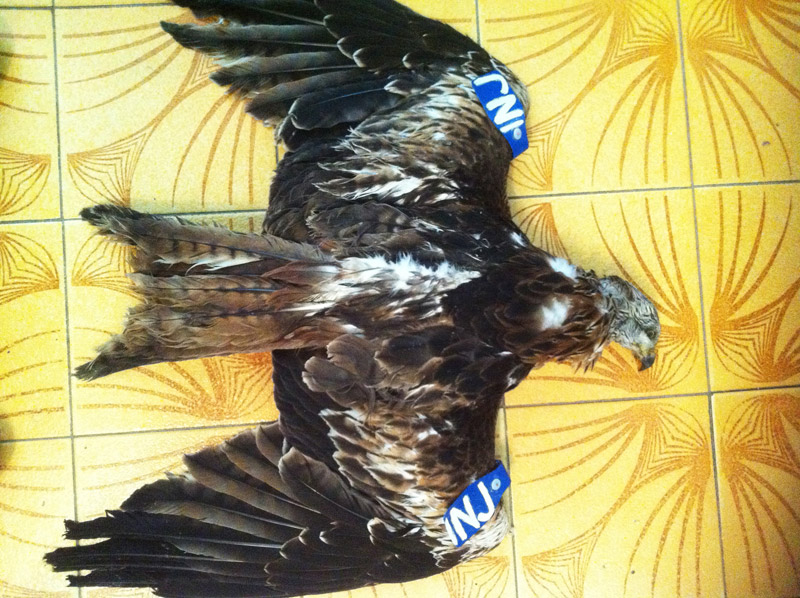
- Poisoned red kite