Emergency intervention for cats and dogs

If you think that a cat or dog has ingested a poison bait, you should induce vomiting within 30-60 minutes of ingestion, but only if:
the animal is conscious and awake
the animal has not ingested acids, strong bases, or oil derivatives
To induce vomiting, you can have the animal ingest supersaturated saline solution or 10 volume hydrogen peroxide (1 ml/kg of body weight).
If the animal does not vomit within 5 minutes of administering the emetic, you can repeat the process.
Administering activated carbon is also useful, as it interferes with the assimilation of toxic substances.
After the emergency intervention, it is however essential to take the animal to a vet.
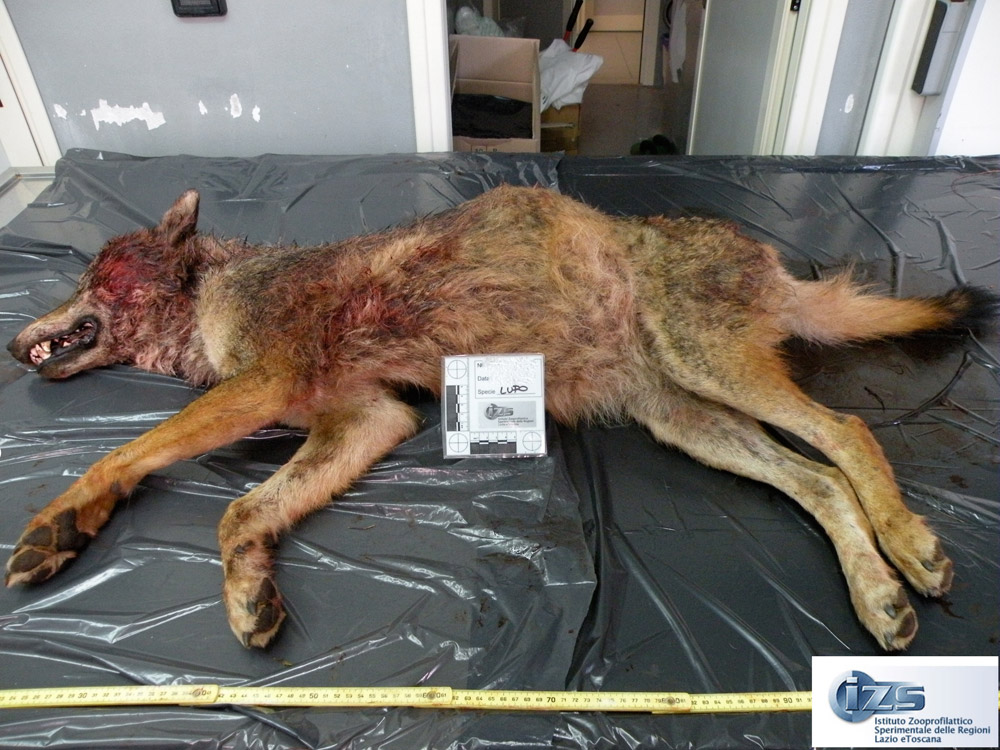
What to do when finding presumably poisoned carcasses, animals, or baits

Reporting a poisoning case
The owner of an animal that has suffered from apparent poisoning must report the case to the competent authorities, either through the veterinarian who diagnosed the suspected poisoning, or directly to law enforcement authorities (Carabinieri, Police, State Forestry Corps, Municipal Police, animal control officers, etc.). They will take care of involving a veterinarian or the Veterinary Services of the local health authority.
If a citizen finds poison baits, or apparently poisoned wild animals or carcasses, he/she must report the finding to the State Forestry Corps (emergency telephone number: 1515) or to a law enforcement authority (State Forestry Corps, Police, Carabinieri, Municipal Police, animal control officers, etc.) or to the Veterinary Services of the local health authority.
Any law enforcement authority has the duty to receive the notification and take the necessary steps according to applicable law.
Italian law
The fundamental Italian law in this field is the Ordinance of the Ministry of Health of February 10, 2010 “Norme sul divieto di utilizzo e di detenzione di esche o di bocconi avvelenati” (Rules prohibiting the use and possession of poison baits). The ordinance has been extended by one more year through Ordinance of January 14, 2014.
The Ordinance can be downloaded at http://tinyurl.com/mfjzduh.
It follows a first ordinance of the Ministry of Health of December 18, 2008 (and subsequent modifications: 19/03/2009 and 14/01/2010). An instruction of the Ministry of Health (circolare applicativa, 15/11/2011) explains how to apply the rules contained in the ordinance.
Article 1 of the Ordinance of February 10, 2010 prohibits improper use, preparation, mixing and scattering of poison baits or morsels, or baits containing toxic or harmful substances, including fragments of glass, plastic, metal or explosive material. It is moreover prohibited to possess, use or scatter any food prepared in ways that may cause poisoning or injuries to those ingesting it.
The Ordinance also prescribes to set up coordination boards at each Prefecture (local offices of the Ministry of the Interior) to manage the necessary interventions and to monitor this phenomenon. The board must include a representative of the province, the mayors of relevant areas, representatives of the Veterinary Services at the local health authorities, of the State Forestry Corps, of competent Preventive Animal Healthcare Institutes, of animal control officers and local police, and an independent veterinarian appointed by the Association of Veterinarians of that province.
Unfortunately, only few prefectures in Italy have already set up this board.
The ordinance identifies the subjects to be involved upon discovery of (suspected) poison baits or carcasses, and precisely defines their tasks and responsibilities:
Veterinarians
When dealing with an animal that apparently died from poisoning, or with a live animal whose symptoms may be attributed to poison, veterinarians are obliged to report the case (even via fax) to the mayor of the municipality where the animal was found, and to the Veterinary Service of the competent local health authority.
After reporting the episode, the veterinarian must deliver the carcass and/or the possibly poisoned material to the Veterinary Services at the local health authority, that will take care of sending it to the competent Preventive Animal Healthcare Institute. The veterinarian should also provide a case history as detailed as possible, in order to help the analytical research, as well as further useful information (name of the owner, discovery location, etc.)
Preventive Animal Healthcare Institutes
Preventive Animal Healthcare Institutes must perform the necropsy and analyse the material within 48 hours of receiving the carcass and/or baits. Toxicology screens on received material and /or on samples taken during necropsy must be carried out within 30 days of receiving the samples.
If the anatomo-pathological test (necropsy) does not rule out suspicion of death from poisoning, the anatomopathologist at the Preventive Animal Healthcare Institute must inform via fax:
the veterinarian who sent the sample
the mayor
the Veterinary Services at the local health authority
the Public Prosecutor's office
These subjects will receive further information once lab test results are available.
Mayors
As soon as a veterinarian informs the mayor that a suspect carcass or bait has been found, the mayor must take action to start an investigation together with the competent authorities.
If the Preventive Animal Healthcare Institute notifies that poisoning cannot be ruled out (pending results of toxicology screens), within the following 48 hours the mayor must:
order the necessary intervention to clear the area where the carcass and/or baits were found
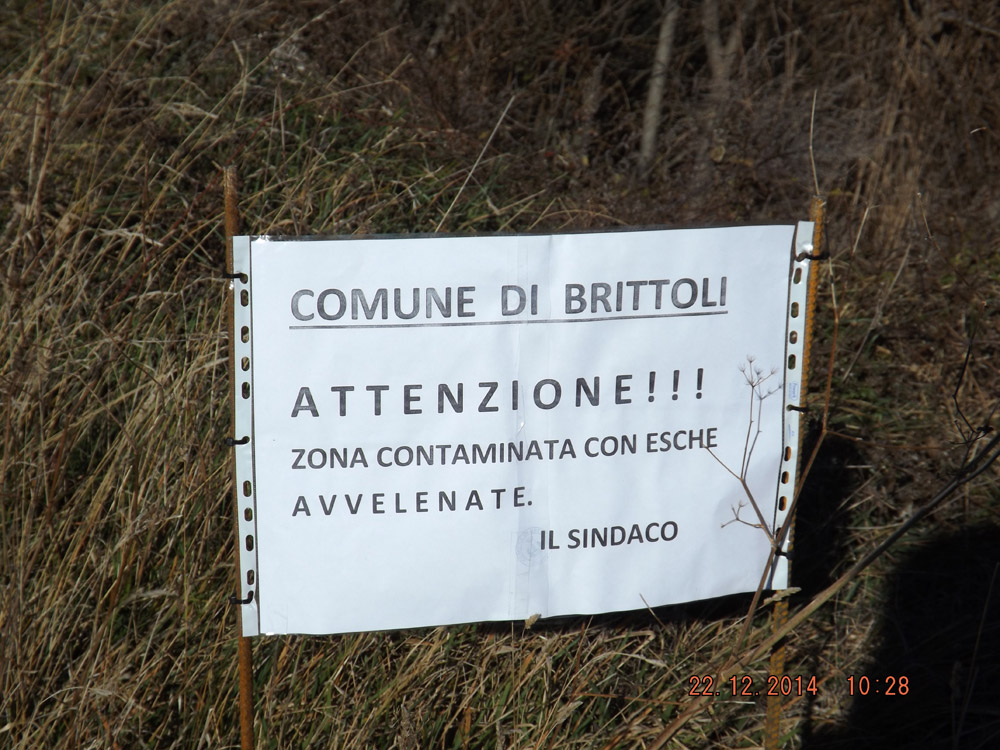
have the necessary signs installed to mark the area as dangerous
intensify checks by competent authorities